
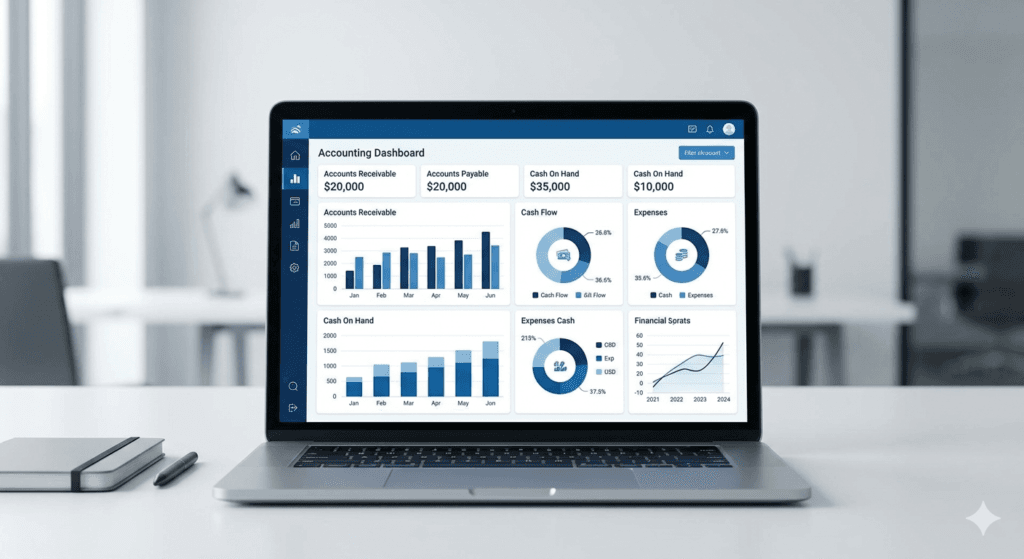

AI in Accounting: How Smarter Workflows Save Time and Improve Accuracy
Accounting teams face pressure to work quickly, stay accurate, and organize financial information. For many businesses, this means finding better ways to manage repetitive tasks while keeping control over the details. AI can help with this.
In accounting, AI is not about replacing people. It mainly assists with routine tasks, reduces manual work, and allows teams to focus on review, accuracy, and decision-making. This includes invoice processing, transaction matching, reconciliations, and support for reporting. CPA.com, ICAEW, and IFAC have highlighted these workflow areas in their recent accounting and finance guidelines.
What AI Looks Like in Accounting
In most accounting workflows, AI serves best as a support tool. It can pull data from invoices, suggest categories, identify unusual transactions, and help draft summaries for reports. This doesn’t mean the work is done automatically. Instead, it speeds up the initial part of the process, allowing the accounting team to focus on items that require judgment.
This is important because many accounting tasks are repetitive. Although the work is critical, it can distract from reviewing exceptions, explaining changes, and helping leadership understand the numbers. When used carefully, AI allows teams to spend less time on data handling and more time on tasks that truly need their attention.
Accounts Payable: A Clear Starting Point
Accounts payable is an area where AI can be helpful. A typical AP process includes collecting invoices, data entry, coding, approvals, and matching documents. As the volume increases, this can become slow and difficult to manage.
AI can assist by:
Reading invoice details automatically.
Spotting missing information before it is recorded.
Suggesting account codes based on historical data.
Flagging discrepancies in pricing or quantity.
The benefits go beyond speed; visibility also improves. Routine items become easier to process, while unusual items become noticeable more quickly. This gives the team extra time to resolve problems before they affect reporting.
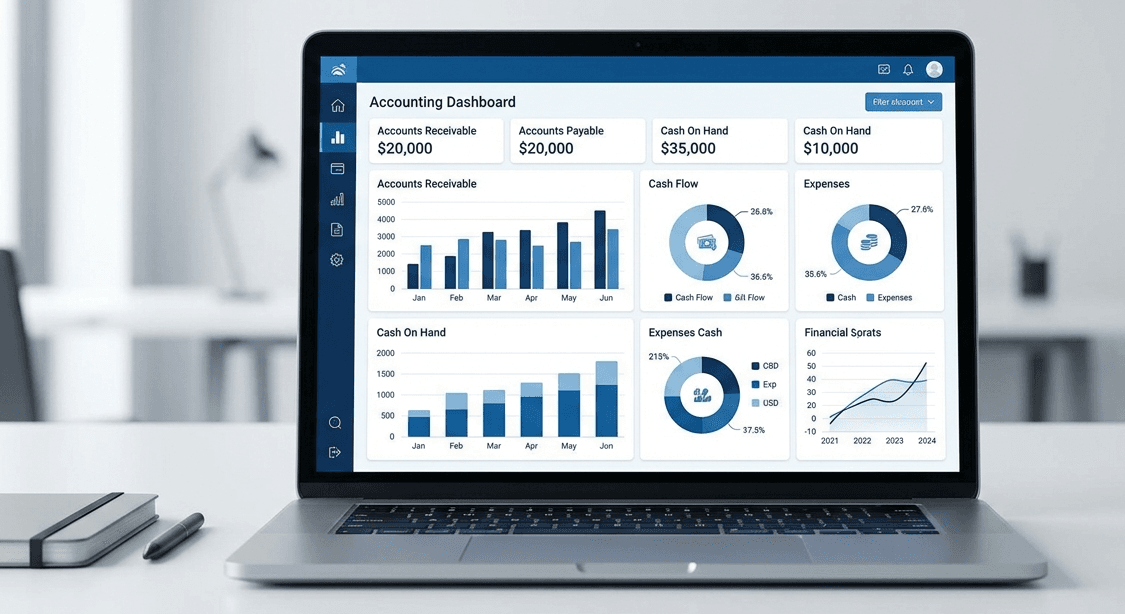
Reconciliations Become Easier to Manage
Matching transactions across systems often involves repeated comparisons, inconsistent descriptions, and time spent tracking small differences. AI can identify likely matches and separate straightforward items from those that need closer examination.
For businesses seeking quicker financial cleanup and a smoother closing process, this leads to significant improvements. Instead of spending time on every line item, accountants can focus on the exceptions that truly matter.
AI for reconciliations and transaction matching

Month-End Close Still Depends on People
The month-end close is one of the most critical accounting workflows. It includes reconciliations, accruals, journal entries, and financial reviews, often under tight deadlines. AI can help teams spot unusual account activity and prepare draft variance explanations, making the process more efficient.
However, the close process still needs oversight. Accounting policies, judgment, documentation, and final reviews remain essential. AI’s role here is to support, not replace. This balanced approach matches the professional guidance from IFAC and ICAEW, which emphasizes the need for both capability and governance.
AI for month-end close and financial reporting
Reporting: Useful, Not Just Faster
Reporting goes beyond producing numbers; it also includes explaining what has changed and why it matters. AI can help craft initial draft commentary and summarize trends, giving finance teams a stronger starting point for internal discussions.
Yet, good reporting still requires context. A system might notice a change in margin, but it may not understand the business rationale, such as a strategic pivot or a one-time market shift, unless a professional provides that interpretation.
Better Workflows Start with Better Process Design
One common misconception about AI in accounting is that technology alone can fix operational problems. In reality, weak processes tend to stay inadequate unless the team also improves the workflow itself. If approvals are vague or records are inconsistent, AI may highlight these issues, but it cannot fix the underlying problems on its own.
The best results usually come from a careful approach:
Start with one workflow (like AP or Bank Recs).
Define success clearly.
Keep review points intact.
Assess ROI based on time saved and rework reduced.
Human Review Still Matters
AI can help with accounting tasks, but it does not remove responsibility. Someone still needs to review the output, apply policy, and ensure the final numbers are reliable. Accuracy, documentation, and professional judgment remain just as important as ever. The true value of AI is in its ability to reduce repetitive tasks and allow skilled professionals to concentrate on high-value strategy.
Final Thoughts
AI is changing accounting workflows by improving visibility and reducing manual labor. For small and growing businesses, the opportunity is clear: use AI where it boosts efficiency, involve people where judgment is needed, and create accounting workflows that are both quicker and more reliable.